If you wear a fitness watch or ring, you may have noticed a number called HRV, or heart rate variability. It is one of the most useful windows we have into how your body is coping with stress - and, encouragingly, it is something a regular yoga and breathing practice can genuinely improve.
What is heart rate variability?
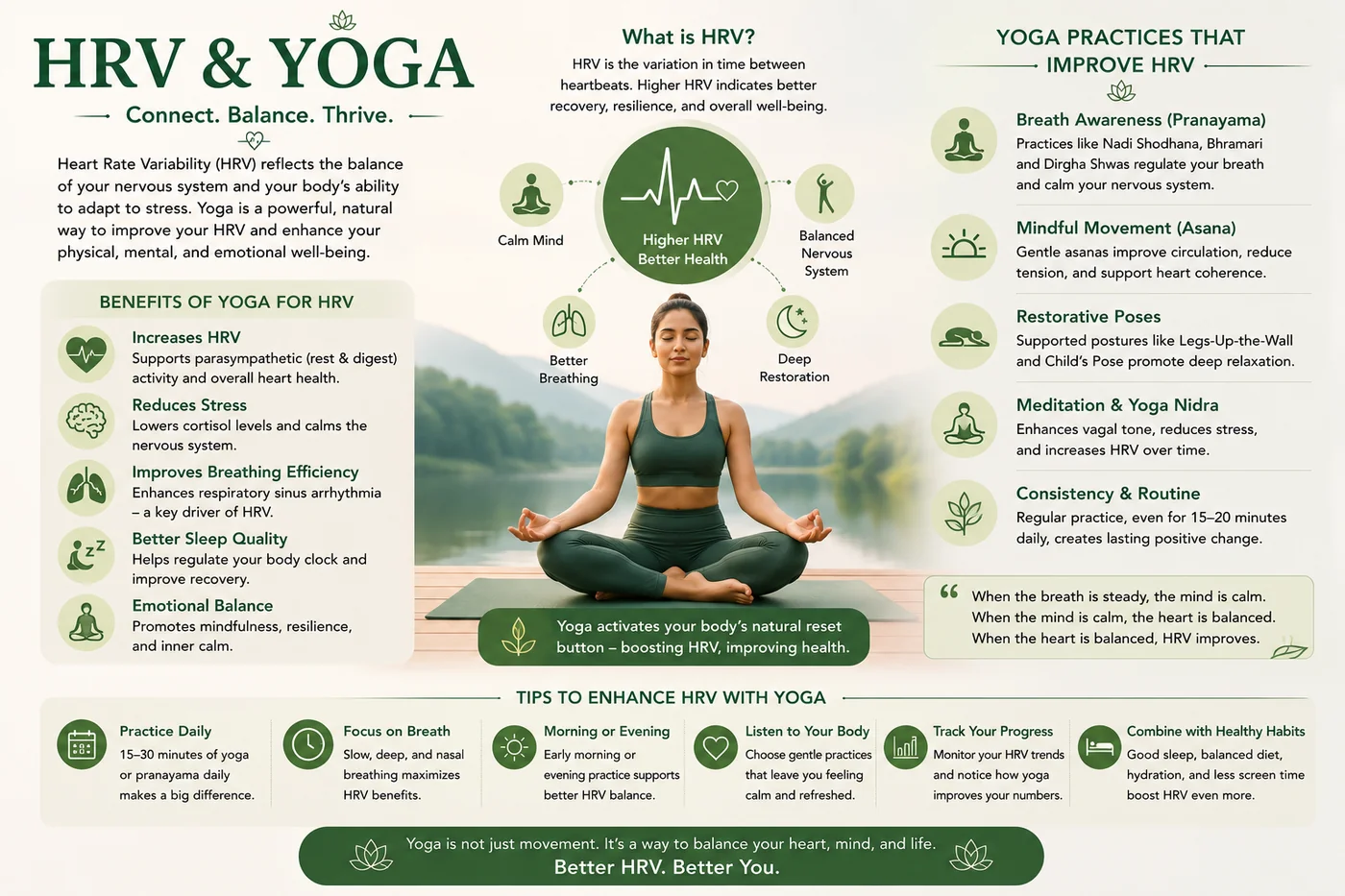
Your heart does not beat like a metronome. Even when your pulse is a steady 60 beats per minute, the tiny gaps between individual beats are constantly changing - sometimes 0.9 seconds apart, sometimes 1.1. Heart rate variability is the natural variation in the time between heartbeats.
That might sound like a flaw, but it is actually a sign of health. A responsive, adaptable heart reflects a well-balanced autonomic nervous system - the part of you that runs automatically in the background, with two branches:
- The sympathetic branch ("fight or flight"), which speeds things up.
- The parasympathetic branch ("rest and digest"), which calms things down.
Higher variability generally means these two branches are communicating well and your body can shift smoothly between effort and recovery.
Why HRV matters
As a general rule, a higher HRV (for you) tends to reflect better stress resilience, recovery and adaptability, while a persistently low HRV can be a sign of stress, fatigue or poor sleep.
HRV is closely linked to the vagus nerve, the main highway of your parasympathetic "rest and digest" system. Good vagal tone helps you recover after stress, sleep well and stay calm under pressure.
It is worth knowing that HRV is deeply individual. What matters is not how your number compares to someone else's, but how your trend changes over time. Age, fitness, sleep, alcohol, illness and stress all influence it.
What lowers HRV
Common things that tend to suppress HRV include:
- Chronic stress and anxiety
- Poor or too little sleep
- Alcohol, especially in the evening
- Overtraining without recovery
- Sitting still and shallow breathing all day
How yoga and breathing raise HRV
This is where a mindful practice becomes powerful. Several parts of yoga directly support the parasympathetic nervous system and, over time, healthier HRV.
1. Slow, paced breathing
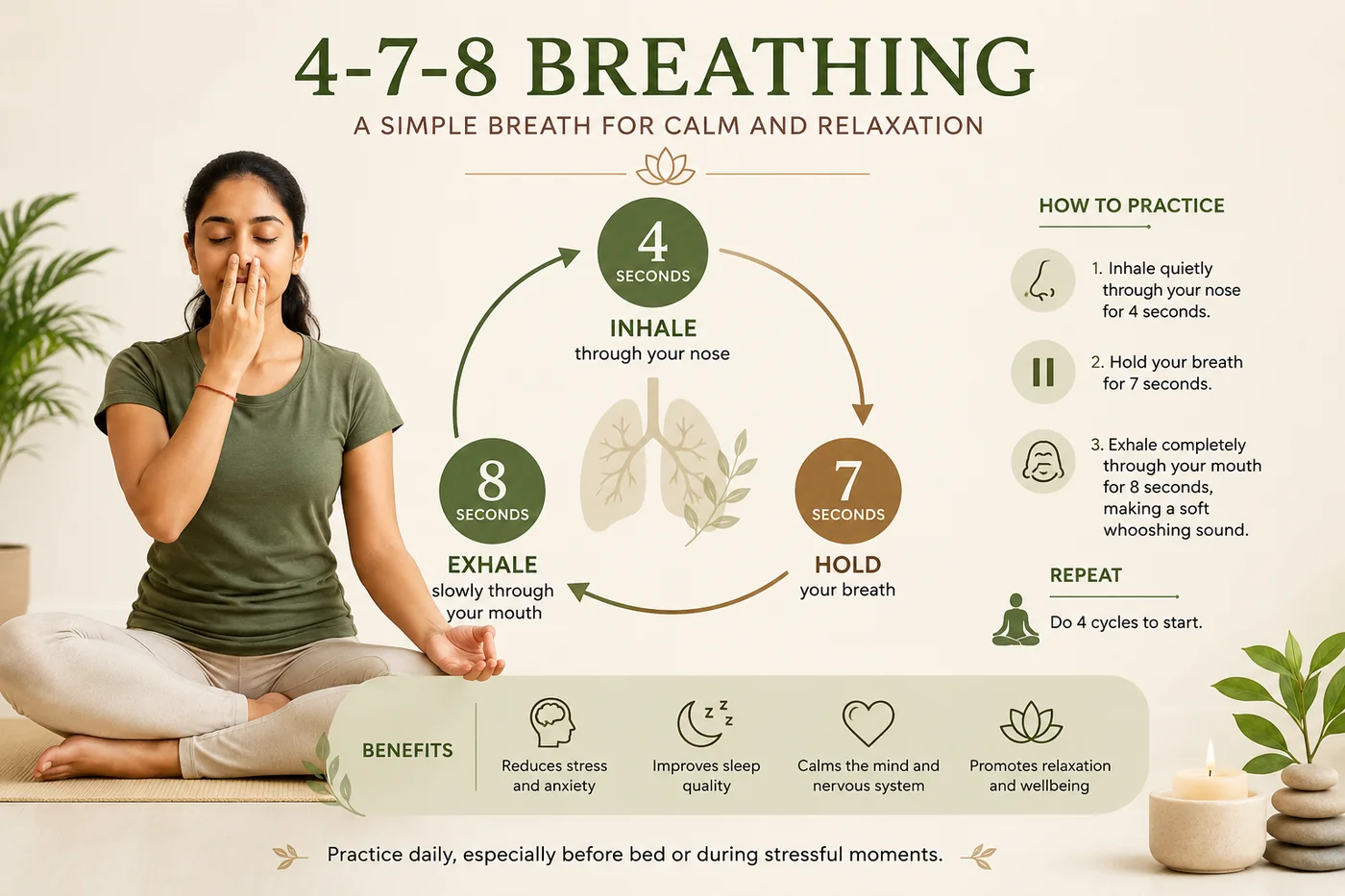
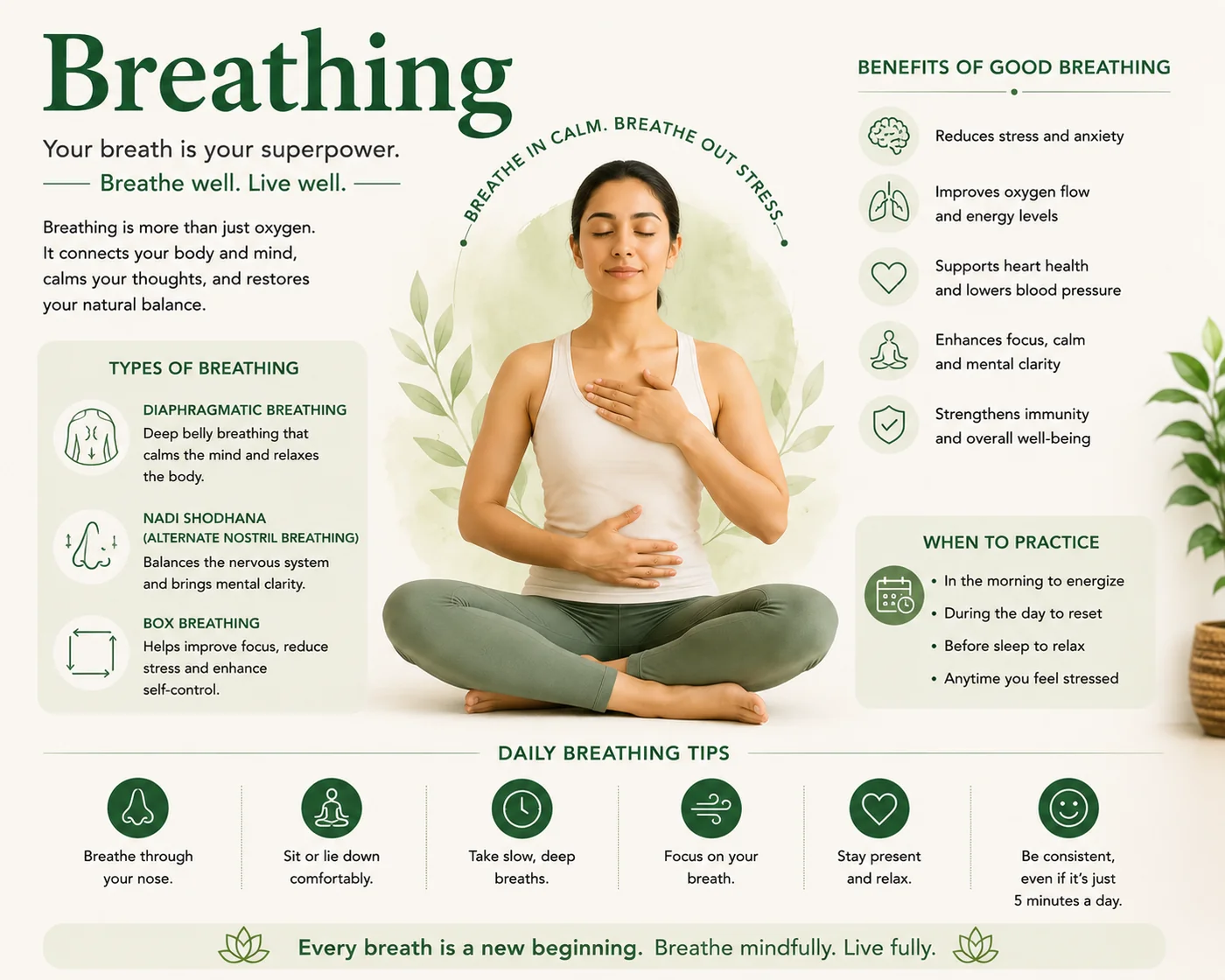
This is the fastest, most reliable lever. Breathing at around five to six breaths per minute - much slower than the usual twelve to sixteen - stimulates the vagus nerve and increases HRV, often within a single session. A longer exhale is especially calming.
Our free breathing timer makes this easy: the "Calming Breath" pattern guides a gentle four-in, six-out rhythm that is close to this resonant range.
2. Asana and gentle movement
A balanced practice that moves between effort and rest trains your nervous system to shift gears smoothly - the very quality that HRV reflects. Restorative and gentle practices are particularly supportive for recovery.
3. Meditation and deep relaxation
Practices such as guided relaxation and meditation lower stress hormones and strengthen the "rest and digest" response, supporting HRV over the longer term.
A simple way to start
You do not need a wearable to benefit - your nervous system responds whether or not you are tracking a number. To support your HRV:
- Practise slow breathing for five to ten minutes most days.
- Protect your sleep - it is when much of your recovery happens.
- Move regularly, but balance effort with genuine rest.
- Be patient. HRV responds to consistent habits, not one-off efforts.
If you would like guidance building a calming, nervous-system-friendly practice - whether for stress, high blood pressure or simply more everyday ease - a personalized session is a wonderful place to begin.
This article is for general education only and is not medical advice. HRV is one signal among many; if you have concerns about your heart or health, please consult a qualified healthcare professional.