If you have ever lain awake with a racing mind, the answer to a calmer, quieter night may be as close as your own breath. The 4-7-8 breathing technique is one of the simplest and most effective tools for switching off stress - and it takes less than two minutes to do.
What is the 4-7-8 breath?
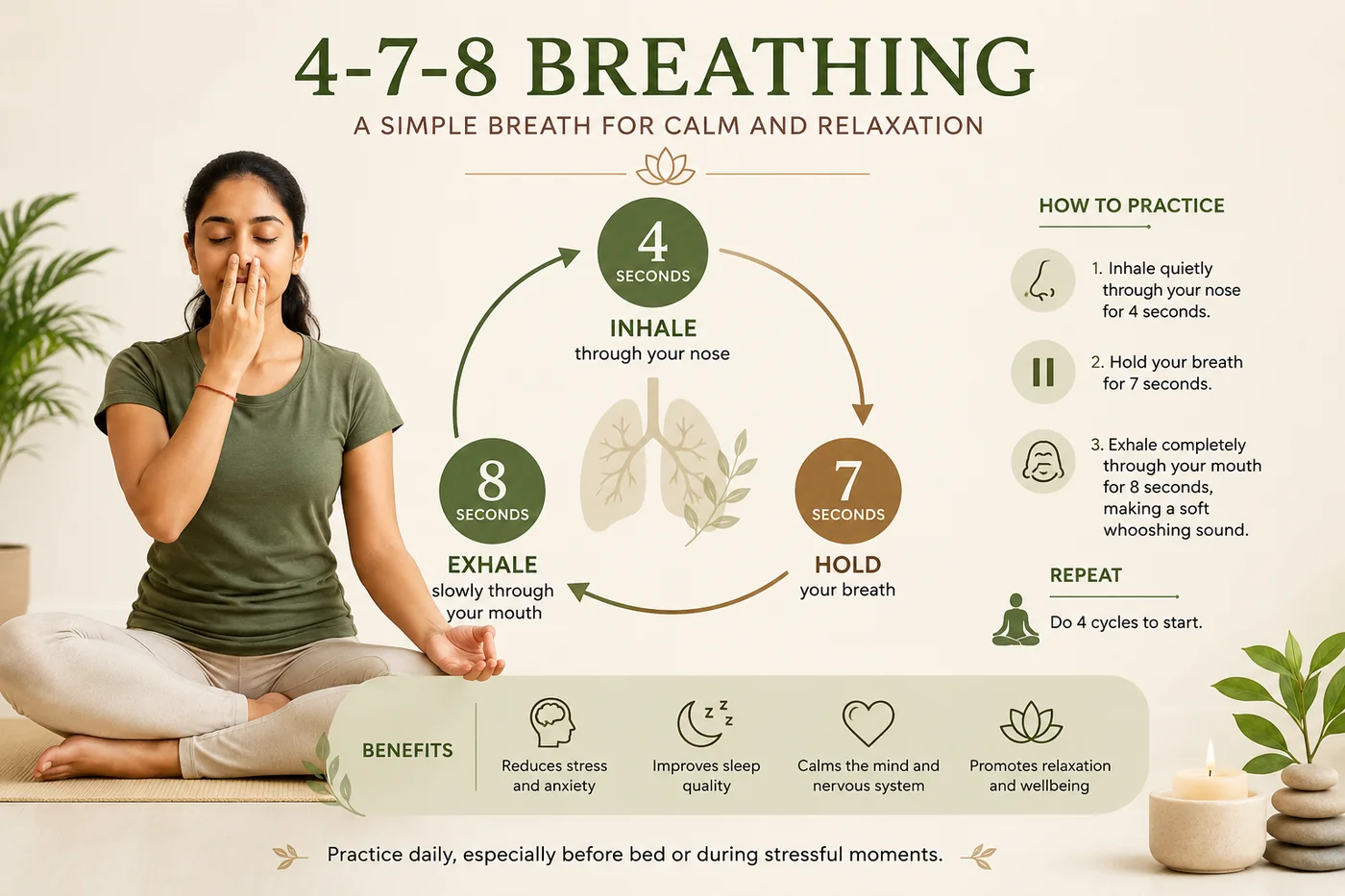
The 4-7-8 breath is a gentle, paced breathing pattern rooted in the yogic science of pranayama and popularised by Dr. Andrew Weil. The name says it all:
- Inhale quietly through your nose for a count of 4
- Hold your breath for a count of 7
- Exhale slowly through your mouth for a count of 8
That long hold followed by an even longer exhale is the key. It gently activates the parasympathetic nervous system - your body's "rest and digest" mode - signalling that it is safe to relax.
Benefits of 4-7-8 breathing
Practised regularly, this simple pattern can:
- Help you fall asleep faster by quieting a busy mind at bedtime
- Ease anxiety and stress in tense moments
- Slow the heart rate and lower physical tension
- Improve focus by giving the mind a single, steady thing to follow
- Curb cravings and reactivity by creating a pause before you respond
It is often described as a "natural tranquiliser for the nervous system" - not because it sedates you, but because it helps your body find its own calm.
How to practise it, step by step
- Sit or lie down comfortably, with your spine relaxed.
- Rest the tip of your tongue just behind your upper front teeth (keep it there throughout).
- Exhale completely through your mouth.
- Close your mouth and inhale quietly through your nose for a count of 4.
- Hold your breath for a count of 7.
- Exhale fully through your mouth, with a soft "whoosh", for a count of 8.
- That is one cycle. Repeat for four cycles to begin.
The speed matters less than the ratio - keep the exhale about twice as long as the inhale, and don't strain.
Tips for beginners
- Start with just four rounds, once or twice a day. You can build up slowly.
- If holding for 7 feels too long at first, keep the same rhythm with smaller counts (like 2-3.5-4) and lengthen over time.
- Practise it when you are calm too, so the technique is ready when you truly need it - before sleep, before a stressful event, or any time you feel overwhelmed.
- If you feel light-headed, return to your natural breath and go gentler next time.
Try it now
The easiest way to learn the rhythm is to be guided. Our free breathing timer has a 4-7-8 setting with an animated circle that expands and contracts so you can simply follow along - no counting required.
Give it a few rounds tonight before bed and notice how your body settles. For a deeper, personalised breathing and relaxation practice, feel free to reach out - it would be a joy to guide you.
This article is for general wellbeing and is not medical advice. If you have a respiratory or cardiovascular condition, or are pregnant, please check with your doctor before holding the breath.